Sustainable Weight Loss: What Actually Works? 7 Proven Tips
Every January, and again before every wedding season, millions of people start a diet. Many lose a few kilos fast. Most gain them back within months. If that sounds familiar, the problem is rarely your discipline. The problem is the method.
So, sustainable weight loss: what actually works? In short, it is a slow, steady change in food, movement, sleep and stress that you can keep up for years, not weeks. This guide explains seven principles that hold up in clinical practice, and how a doctor-led plan can make them easier to follow.
Why Most Diets Fail
Crash diets work on one idea: eat far less, lose weight fast. Your body responds by slowing your metabolism, increasing hunger and pushing you towards cravings. Strict plans are also hard to follow at weddings, festivals, office lunches and family dinners, which is real life in Lucknow.
The World Health Organization describes overweight and obesity as a long-term health concern linked to many chronic conditions. That is exactly why a short-term fix is not enough. You need an approach built for the long term.
What Sustainable Weight Loss Really Means
Sustainable weight loss means losing weight at a pace your body can handle, mostly from fat rather than muscle, and keeping it off. It has three features:
- It is gradual. There are no starvation days and no “7 kilos in 7 days” promises.
- It fits your life. You still eat roti, dal, sabzi and the occasional mithai.
- It looks after your health. Energy, sleep, digestion and hormones improve along the way.
If you cannot imagine eating this way six months from now, it is probably not sustainable.
Principle 1: Start With a Realistic Pace
As general guidance, many health authorities suggest aiming for roughly half a kilo to one kilo per week at most, and slower is fine. The right pace for you depends on your starting weight, age, medical history and medicines, so your doctor should set it.
Weight also does not fall in a straight line. Water retention, periods, salt intake and sleep can move the scale by a kilo or more overnight. Track the trend over four to six weeks instead of reacting to daily numbers. Waist measurement, how your clothes fit and your energy are just as useful signs of progress.
Principle 2: Check the Root Cause First
This step is skipped far too often. If weight refuses to move despite honest effort, something underneath may be at play. Thyroid problems, hormonal imbalance, PCOS, insulin resistance, poor sleep and some medicines can all make weight loss harder.
That is why a good plan starts with an assessment, not a diet chart. At our clinic, a weight and nutrition consultation begins with a root-cause review covering thyroid, hormones and metabolism. If you are a woman with irregular periods and stubborn weight, our guide to the best PCOS doctor in Lucknow explains why hormonal care matters, and our women’s health team can help.
Struggling despite dieting? Read why am I not losing weight despite dieting for the common hidden reasons.
Principle 3: Eat Balanced, Local, Familiar Food
You do not need imported superfoods. The best weight loss diet plan in Lucknow is built on food you already know:
- Protein at every meal: dal, curd, paneer, eggs, sprouts, chana, fish or chicken if you eat them. Protein keeps you full and helps protect muscle.
- Fibre-rich foods: vegetables, salads, whole grains, fruit and legumes slow digestion and curb snacking.
- Smart carbs: swap some white rice and maida for millets, whole wheat, oats or brown rice, and watch the portion size.
- Healthy fats in small amounts: nuts, seeds, mustard or groundnut oil used sparingly.
- Fewer liquid calories: sweetened chai, cold drinks and packaged juices add up quietly
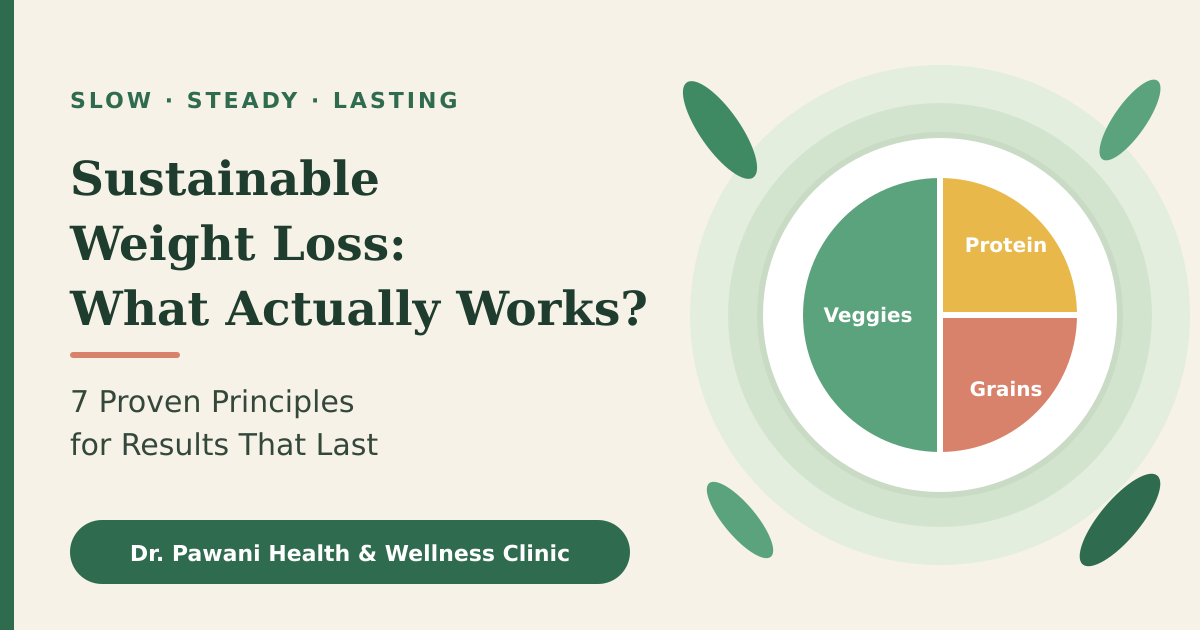
A simple plate method works well. Fill half with vegetables, a quarter with protein and a quarter with whole grains. Eat slowly and stop when you are comfortably full.
Good digestion also matters. Bloating, constipation and acidity can undermine your efforts, so see our gut health care page and the guide to a gut health clinic in Lucknow. If you have been told you have a fatty liver, read what to eat and avoid for fatty liver.
Principle 4: Build Strength and Daily Movement
Exercise alone rarely drives large weight loss, but it is vital for keeping weight off and protecting your health. The WHO recommends adults get regular physical activity each week, including muscle-strengthening work on two or more days.
You do not need an expensive gym:
- Walk 30 minutes most days, and take short walks after meals.
- Add two strength sessions a week using body weight, resistance bands or light weights.
- Take stairs, stand while on calls and move every hour.
- Choose something you enjoy, whether yoga, cycling, swimming or dance.
Strength training matters because muscle burns more energy than fat, even at rest. Losing weight without it often means losing muscle too.
If you have joint pain or an old injury, speak to our ortho care team before starting.
Principle 5: Fix Sleep and Stress
Poor sleep raises hunger hormones, lowers willpower and increases cravings for sugar and fried food. Chronic stress raises cortisol, which is linked with belly fat and emotional eating.
Simple steps help:
- Sleep and wake at consistent times, aiming for seven to eight hours.
- Stop screens 30 to 60 minutes before bed.
- Keep dinner early and light.
- Practise breathing exercises, meditation or a short evening walk.
Our Ayurvedic consultation and holistic treatments look at sleep, stress and routine alongside diet, because they affect weight just as much as food does.
Principle 6: Build Habits, Not Willpower
Willpower runs out by evening. Habits do not. Make healthy choices the easy choices:
- Keep fruit, roasted chana and nuts visible, and sweets out of sight.
- Plan meals for the next day.
- Drink a glass of water before meals.
- Use a smaller plate.
- Change one habit at a time, and add the next only after it feels natural.
Small wins build confidence. Replacing two sugary teas a day with unsweetened tea, for example, is a change you can actually keep.
Principle 7: Plan for Slips
You will have a wedding, a festival or a bad week. That is normal. Sustainable weight loss does not require perfection. It requires getting back on track at the next meal, not next Monday.
One heavy meal does not undo weeks of effort, so skip the guilt. Resist the urge to “make up” for it by starving. Eat normally, walk a bit more and continue.
What Does Not Work
Be careful with these common traps:
- Crash and fad diets: fast loss, fast regain, and often muscle loss.
- Skipping meals: it usually leads to overeating later.
- Unverified “fat burner” pills and teas: these can be unsafe and can interact with medicines.
- Extreme detoxes: your liver and kidneys already do this job.
- Self-medicating with herbs or supplements: natural does not always mean safe. Use them only under qualified guidance and for a confirmed need.
For a fuller look at what to expect from professional care, see our guide to the best weight loss clinic in Lucknow.
When to See a Doctor in Lucknow
Consider professional help if you:
- Have tried several diets and regained the weight
- Have thyroid issues, PCOS, diabetes, high cholesterol or fatty liver
- Notice sudden weight gain, constant fatigue or hair fall
- Have joint pain that limits exercise
- Want a plan that suits your body, not a generic chart
At Dr. Pawani Health & Wellness Clinic in Arjunganj, our doctors combine Ayurvedic and modern medical care. Our approach includes a root-cause assessment, a customised meal plan built around local Indian food, Ayurvedic support for fat metabolism, and a lifestyle and sleep plan. Supplements are suggested only for confirmed deficiencies.
Every body responds differently, but many people start noticing early changes in about four to six weeks, with more visible results over two to three months when they follow the plan. You also get monthly follow-ups and WhatsApp support between visits, so you are never guessing alone. Learn more on our lifestyle disorders page, or see all services and the FAQ.
If you are looking for a weight loss doctor in Lucknow or Ayurvedic weight loss in Lucknow, you are welcome to walk in or contact us to book a consultation. For general guidance on choosing a safe program, the NIDDK is a helpful reference.
Clinic details: Dr. Pawani Health & Wellness Clinic, 1st Floor, Sultanpur Road, Arjunganj, Lucknow 226002. Phone/WhatsApp: 9278482911. Email: drpawaniclinic@gmail.com.
FAQs
1. What is sustainable weight loss?
It is losing weight gradually through lasting changes in food, activity, sleep and stress, so the weight stays off instead of coming back.
2. How fast should I lose weight?
Many health authorities suggest a slow, steady pace, often up to about half to one kilo a week. Your doctor can set a safe target for your body.
3. Can I lose weight eating Indian food?
Yes. Dal, sabzi, roti, curd and salads work well when portions are balanced and protein and fibre are included.
4. Why do I regain weight after dieting?
Crash diets slow your metabolism and are hard to maintain. Without lasting habits, old patterns return.
5. Do I need supplements?
Not usually. They are useful only for confirmed deficiencies and should be taken under medical guidance.
6. Can thyroid or PCOS affect weight loss?
Yes. These conditions can make weight loss harder, so a medical check is worth doing if progress stalls.
7. How long before I see results?
It varies by person. Many notice early changes in four to six weeks and clearer results in two to three months with consistent effort.
8. Is Ayurvedic weight loss safe?
It can be when guided by a qualified doctor who knows your health history. Avoid self-medicating with herbal products.