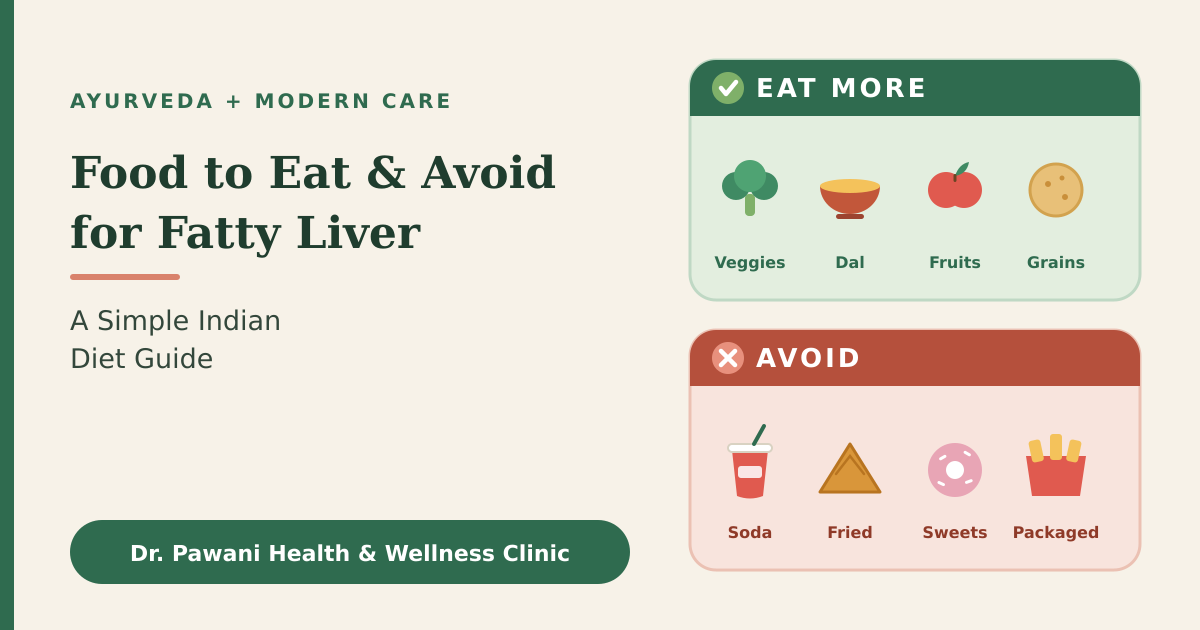
Food to Eat and Avoid for Fatty Liver: A Simple Indian Diet Guide
Many people hear the words “fatty liver” for the first time on an ultrasound report, often during a checkup done for something else. There is usually no pain, no warning and no clear symptom. Then comes the big question: what should I eat now?
The good news is that food is one of the most powerful tools you have. In many cases, steady changes in diet and lifestyle can help improve fatty liver over time. This guide explains the food to eat and avoid for fatty liver, with simple Indian meal ideas, common mistakes and when to see a doctor.
What Is Fatty Liver?
Fatty liver means extra fat has built up inside liver cells. A small amount of fat is normal, but when it grows too much, it can affect how the liver works.
There are two broad types. One is linked with alcohol. The other is not linked with alcohol and is often related to weight, high blood sugar, high cholesterol and an inactive lifestyle. You may hear doctors call it NAFLD or a newer name, MASLD. Both describe the same general problem.
Fatty liver is common in India, and many people have it without knowing. It can slowly progress if ignored, which is why early attention matters.
Why Food Matters So Much
Your liver processes everything you eat. When your diet is heavy in sugar, refined flour, fried food and excess calories, the liver stores more fat. When your diet is balanced and rich in fibre, it gets a chance to recover.
The National Institute of Diabetes and Digestive and Kidney Diseases explains that healthy eating, along with weight management and activity, is a key part of managing non-alcoholic fatty liver disease. There is no single “miracle” food. What works is the pattern of your whole diet, day after day.
Food to Eat for Fatty Liver
Here are the foods that generally support a healthier liver. You do not need to eat all of them. Pick what suits your taste and budget.
Vegetables, especially green and leafy ones
Spinach (palak), fenugreek (methi), bottle gourd (lauki), ridge gourd (turai), cabbage, broccoli and carrots add fibre without adding much fat. Aim to fill at least half your plate with vegetables.
Whole grains
Choose whole wheat roti, brown rice, oats, millets (bajra, jowar, ragi) and daliya instead of refined flour (maida) and polished white rice. They release sugar slowly and keep you full for longer.
Pulses and legumes
Dal, rajma, chole, moong and sprouts give protein and fibre. They also help control blood sugar, which matters for the liver.
Fruits in sensible portions
Apple, papaya, guava, pomegranate, oranges and berries are good options. Whole fruit is better than juice, because juice removes fibre and makes sugar hit faster.
Healthy fats in small amounts
Nuts such as almonds and walnuts, seeds like flax and chia, and oils such as mustard or olive oil in moderation can be part of a liver-friendly diet. Fatty fish like salmon or sardines, where suitable, are also useful.
Lean protein
Curd, buttermilk, paneer in moderation, eggs, fish and skinless chicken give protein without too much unhealthy fat. Vegetarians can rely more on pulses, curd and soy.
Water and unsweetened drinks
Plain water, jeera water, buttermilk without added sugar and unsweetened green tea are better than sugary drinks.
Spices and kitchen ingredients
Turmeric, garlic, ginger, cumin and coriander are commonly used in Indian cooking, and they add flavour without extra salt or sugar. Treat them as part of a healthy kitchen, not as a replacement for medical care.
Foods to Avoid in Fatty Liver
Knowing what to cut down is just as important. These are the main foods to avoid in fatty liver, or at least reduce a lot.
Sugary drinks and sweets
Cold drinks, packaged juices, sweetened tea or coffee, mithai, ice cream, pastries and sweets raise blood sugar and push the liver to make more fat. Fructose-heavy drinks are especially harmful.
Deep-fried and oily food
Samosa, kachori, pakora, puri, chips and street-style fried snacks are heavy on unhealthy fats. Enjoying them once in a while is fine, but daily intake adds up quickly.
Refined carbohydrates
White bread, maida-based items like naan, noodles, momos and bakery biscuits digest quickly and act like sugar in your body.
Processed and packaged food
Instant noodles, chips, frozen snacks, sausages and ready-to-eat meals often contain hidden sugar, salt and unhealthy fats.
Red and processed meat
Mutton, organ meats and processed meats like sausage or bacon can be high in saturated fat. If you eat non-vegetarian food, choose fish or lean chicken more often, and keep portions small.
Too much salt
Pickles, papad, namkeen and salty snacks can worsen blood pressure and fluid balance, and they often come with extra oil.
Alcohol
Alcohol directly harms the liver. If you have fatty liver, most doctors advise avoiding alcohol completely or following the limits your doctor gives you. Do not decide this on your own.
Large portions and late-night eating
Even healthy food can add fat if the portions are large and you eat just before sleep. Meal timing matters.
A Sample Indian Diet Plan
This is a general example, not a personal prescription. Your doctor should adjust it based on your weight, sugar levels, other conditions and food habits.
- Early morning: A glass of warm water. A few soaked almonds or walnuts.
- Breakfast: Vegetable poha, moong dal chilla, oats upma or two multigrain rotis with sabzi and curd.
- Mid-morning: A fruit like papaya or apple, or a glass of buttermilk.
- Lunch: Two rotis, a bowl of dal, a large plate of vegetables, a small bowl of curd and salad.
- Evening: Roasted chana, sprouts chaat or unsweetened green tea with a handful of nuts.
- Dinner (early): Vegetable khichdi, lauki sabzi with one roti, or grilled fish or paneer with vegetables.
Finish dinner two to three hours before bed, and keep it lighter than lunch.
Lifestyle Habits That Support Your Liver
Diet works best when your routine supports it.
- Lose weight gradually. Slow, steady weight loss is safer and more effective than crash diets. Our guide on the best weight loss clinic in Lucknow explains why.
- Move daily. A brisk walk of 30 minutes, yoga or any activity you enjoy helps the liver and improves sugar control.
- Sleep well. Poor sleep affects hormones and hunger.
- Manage stress. Stress can lead to overeating and poor food choices.
- Control blood sugar and cholesterol. Fatty liver often goes along with diabetes, high BP and high cholesterol.
- Look after digestion. A healthy gut supports how your body handles food. Read about gut health in Lucknow to see how digestion and the liver connect.
- Follow up regularly. Liver tests and ultrasound checks help your doctor track progress.
A Note on Herbs and Supplements
Many people search for “liver detox” powders, herbal juices or capsules. Be careful here. Not every herbal product is safe, and some supplements can actually harm the liver, especially if taken in large amounts or without supervision.
If you want Ayurvedic support, consult a qualified doctor who will assess your condition and choose suitable formulations. Please do not start herbal products on your own, particularly if you take other medicines.
How Dr. Pawani Clinic Supports You
At Dr. Pawani Health & Wellness Clinic, fatty liver care combines two systems under one plan. If you are looking for a fatty liver doctor in Lucknow, here is how we help.
Root-cause assessment. The doctor looks at your history, reports, weight, sugar, cholesterol, digestion and routine, so the diet plan fits your actual condition.
Ayurvedic and modern care together. Our Ayurvedic consultation offers personalised herbal and diet guidance, while our modern medical care helps manage related conditions like diabetes and BP.
Personal diet and lifestyle plan. Using local foods and your daily habits, we help you build a realistic fatty liver diet plan in Lucknow you can follow at home. See our weight and nutrition service for more.
Support for related conditions. Our lifestyle disorders care covers obesity, diabetes and BP, which often go together with fatty liver. You can also explore our gut health service and our holistic treatments for stress and sleep.
Results vary from person to person, and the plan is adjusted at every follow-up.
When to See a Doctor
Do not wait if you notice any of these:
- Yellowing of eyes or skin
- Swelling in the legs or stomach
- Severe or continuous stomach pain
- Unexplained weight loss
- Persistent vomiting or extreme tiredness
- Dark urine or very pale stools
Also consult a doctor if your ultrasound shows fatty liver, even if you feel fine. Early guidance is always easier.
FAQs
1. What is the best food to eat for fatty liver?
A balanced diet with plenty of vegetables, whole grains, pulses, fruits, nuts and lean protein supports the liver. No single food works alone.
2. Which foods should I avoid in fatty liver?
Cut down on sugary drinks, sweets, fried food, refined flour, processed snacks, red meat, excess salt and alcohol.
3. Can fatty liver be reversed with diet?
In many people, early fatty liver can improve with weight loss, a healthy diet, exercise and medical guidance. The outcome depends on the individual, so follow-up with a doctor is important.
4. Is rice allowed in fatty liver?
Yes, in controlled portions. Choose brown rice or mix it with plenty of vegetables and dal, and avoid large servings of polished white rice.
5. Do I need an appointment?
Walk-ins are welcome, and you can also book through WhatsApp. More answers are on our FAQ page.
Final Thoughts
Fatty liver is a wake-up call, not a life sentence. With the right food, regular movement and proper medical guidance, many people see steady improvement. Start with small, realistic changes, and build from there.